How many calories are in Jasmine Long Grain Rice Mahatma
1/4 cup dry (3/4 cup prepared) (45 g) of Jasmine Long Grain Rice by Mahatma contains 160 calories
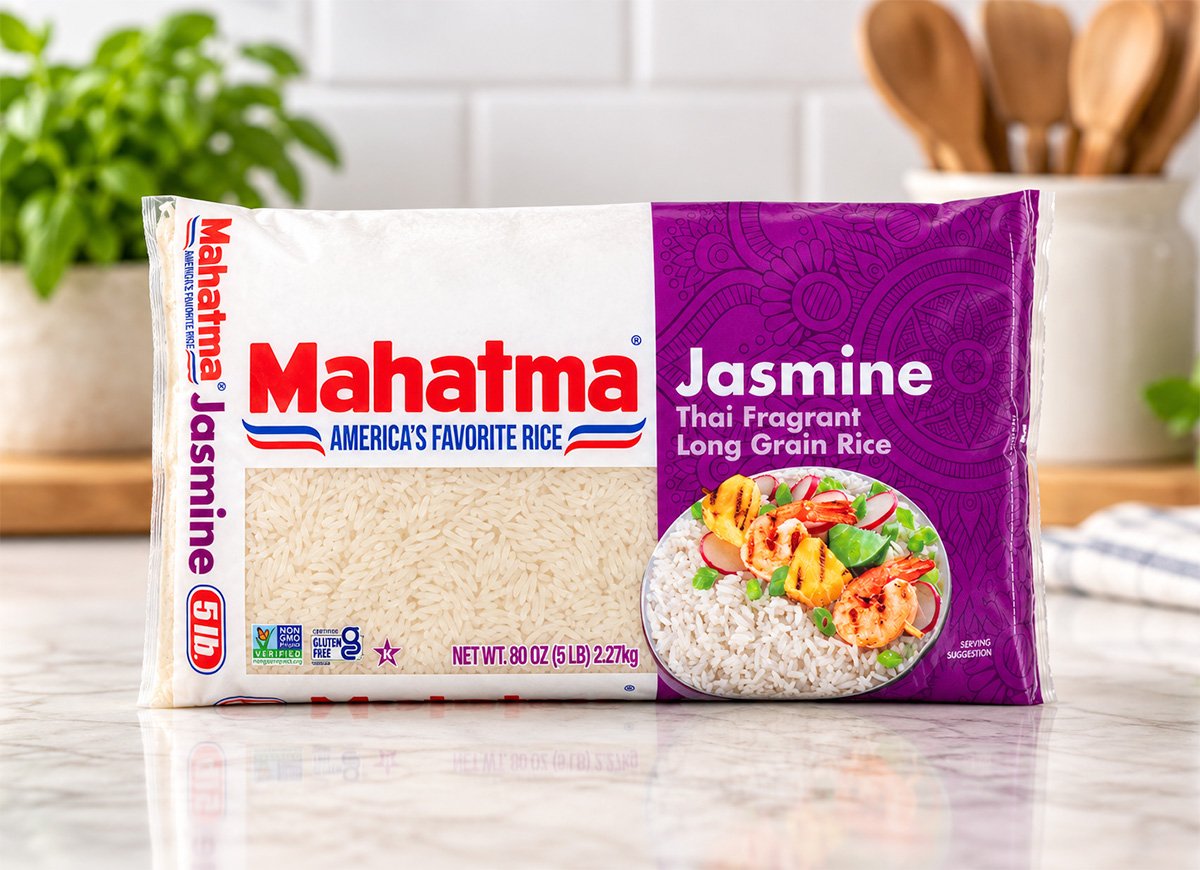
Mahatma Jasmine Long Grain Rice is an aromatic Thai-style white jasmine rice known for its long grains, subtle floral aroma, and soft, slightly clingy texture after cooking.
Product Description
Ingredients: Depending on the specific product, the rice may be enriched with nutrients such as niacin, iron, thiamin, and folic acid, or sold as white jasmine rice without additional ingredients.
Jasmine rice does not usually require soaking before cooking. A common stovetop preparation uses about 1½ cups of water for every 1 cup of rice, with a cooking time of approximately 15 minutes.
Benefits
Good source of carbohydrates: Jasmine rice provides easily digestible carbohydrates that can serve as a convenient source of energy.
Naturally gluten-free: Plain jasmine rice does not contain gluten and can be suitable for people with celiac disease or gluten intolerance, provided it has not been contaminated during processing or preparation.
Easy to incorporate into meals: Its mild flavor and soft texture make jasmine rice a versatile side dish for vegetables, meat, seafood, curries, and stir-fries.
May be enriched with vitamins and minerals: Enriched varieties can provide added iron and B vitamins such as thiamin, niacin, and folic acid.
Things to Consider
High in carbohydrates: White jasmine rice contains relatively little fiber and can raise blood sugar more quickly than many whole-grain foods. People who monitor blood glucose or carbohydrate intake may want to pay attention to portion size and what the rice is served with.
Low in fiber: Because the bran and germ are removed during processing, white jasmine rice contains much less fiber than brown rice or other whole grains.
Portion size matters: Rice is relatively calorie-dense when eaten in large portions. Pairing it with vegetables, protein, and other fiber-rich foods can make the overall meal more balanced.
May contribute to constipation in some diets: White rice itself is low in fiber, so relying heavily on it while eating few fruits, vegetables, or whole grains may make it harder to meet daily fiber needs.
Nutrition Facts
Serving Size 1/4 cup dry (3/4 cup prepared) (45 g)
| Calories | 160 | |
|---|---|---|
| Protein | 3.00 g | |
| Fats | 0.00 g | |
| Mono Unsaturated Fat | 0 g | |
| Poly Unsaturated Fat | 0 g | |
| Saturated Fat | 0 g | |
| Trans Fat | 0 g | |
| Carbohydrate | 36.00 g | |
| Fiber | 0 g | |
| Sugars | 0 g | |
| Calcium (Ca) | 0 mg | |
| Iron (Fe) | 0 mg | |
| Potassium (K) | 0 mg | |
| Sodium (Na) | 0 mg | |
| Cholesterol | 0 mg |
Calories
160
Protein
3.00 g
Fats
0.00 g
Carbs
36.00 g
Similar Foods
More from Mahatma
- Jasmine Rice with Quinoa160 kcal
- Long Grain Wild Rice200 kcal
- Natural Whole Grain Brown Rice150 kcal
- Organic Brown Rice170 kcal
- Red Beans & Long Grain Rice190 kcal
Food Spotlight
Breakfast Tacos - Bean & Cheese on Corn

Per 1 serving

Latest News
- FOODSMushrooms: Nutrition, Health Benefits, and Possible Risks
Mushrooms have a firm texture and rich umami flavor, making them a great ingredient for satisfying meatless meals. Because mushrooms naturally enhance savory flavors, they can also help reduce the need for extra salt without sacrificing taste. They can be sautéed, roasted, grilled, or added to soups, pasta dishes, stir-fries, and many other meals
- DIETHow Saturated Fat Is Linked to Insulin Resistance
Insulin resistance develops when the body’s cells stop responding properly to insulin. When blood sugar remains elevated for a long time, it can gradually and silently damage the kidneys, eyes, heart, and other organs.
Comments
Be the first to share your experience.